


Things to do in Delhi
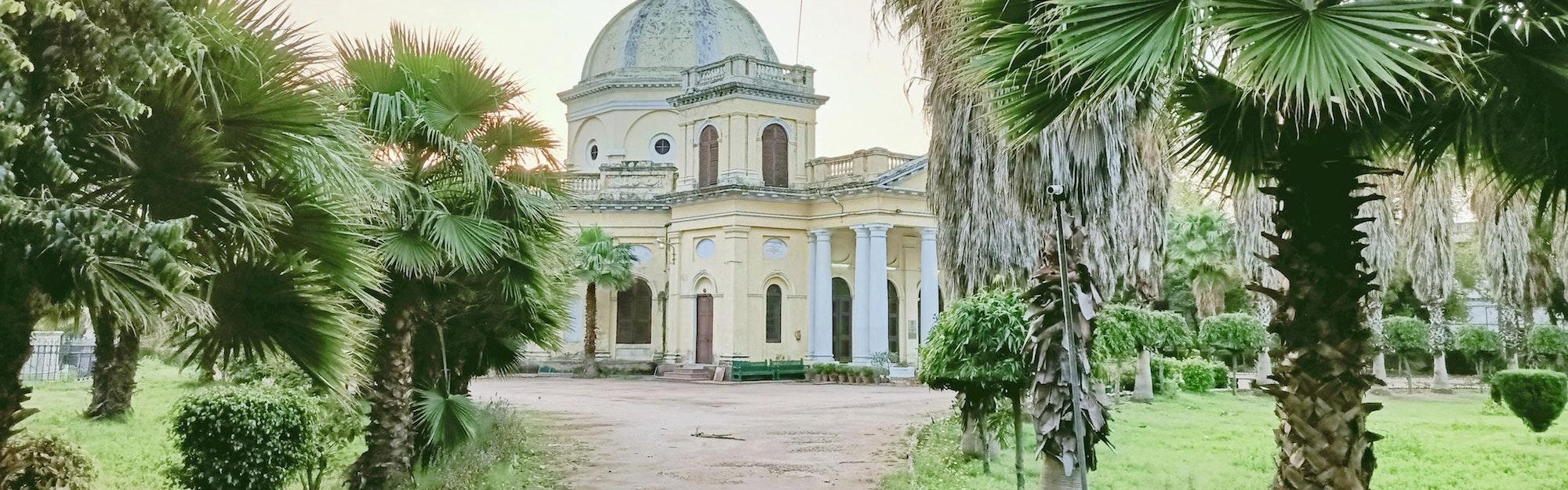
Travellers visiting the magical city of Delhi will be overwhelmed by the sightseeing opportunities available to them; figuring out where to begin will be the hardest part of the journey.
Many visitors kick off their sightseeing at the Red Fort, Delhi's signature attraction, reminiscent of the Mogul Empire that once ruled the region. Other landmark attractions include the majestic Jama Masjid, in Old Delhi's bustling streets, which is India's largest mosque and a breathtakingly beautiful building to photograph; the Chandni Chowk market, the ideal place for an authentically Indian shopping experience; and Humayun's Tomb, another classic example of Mogul architecture, which is especially important to visit for those who are not making the trip to the famous Taj Mahal.
Another must-see while in Delhi is Rashtrapati Bhavan, a palace larger than Versailles and the residence of the Indian President. Here, visitors can watch the changing of the guard and marvel at the building's architecture, built by renowned English architects, Herbert Baker and Edwin Lutyens, between 1921 and 1929. Other worthwhile attractions include the beautiful Lotus Temple; and Rajpath, the main route leading from Rashtrapati Bhavan to India Gate, a memorial monument built for the Indian soldiers who died in World War I, where visitors can relax on the grassy lawns and soak up the scenery.
A great way to visit many of the sights around Delhi is on the Hop On Hop Off Bus, which leaves every 30 minutes and stops at close to 20 of Delhi's top tourist destinations. Tourists pay a once-off fee and can hop on and off at a variety of monuments, gardens, bazaars, museums and galleries.
Red Fort
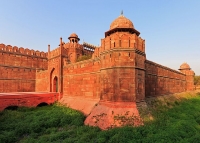
The Red Fort, known locally as Lal Quila, is Delhi's signature attraction, rising high above the clamour of Old Delhi as a reminder of the power and prosperity of the Mogul Empire.…
Red Fort
The Red Fort, known locally as Lal Quila, is Delhi's signature attraction, rising high above the clamour of Old Delhi as a reminder of the power and prosperity of the Mogul Empire. The massive sandstone walls were built in the 17th century to keep out marauding invaders, and still dominate the city's skyline today. Inside is an array of exquisite buildings, which once provided the living quarters for Shah Jehan, his courtiers, family and staff of three thousand. Visitors can marvel at the intricate decoration and only imagine the scenes here at the empire's height, when the walls were studded with precious stones and a 'stream of paradise' drove an ingenious air conditioning system.
Jama Masjid
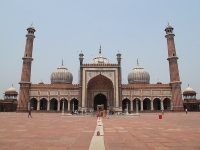
Shah Jehan, the architect of the Red Fort and much of Old Delhi, built Jama Masjid between 1644 and 1656. This grand structure is situated on a hill a few hundred yards west of the…
Jama Masjid
Shah Jehan, the architect of the Red Fort and much of Old Delhi, built Jama Masjid between 1644 and 1656. This grand structure is situated on a hill a few hundred yards west of the Red Fort, and towers over the mayhem of Old Delhi's sprawling streets. Jama Masjid is India's largest mosque and can hold 25,000 worshippers at one time. Wide red sandstone steps lead to entrances on the north, south and east sides of the mosque. Inside is a massive courtyard, dominated by two red-and-white striped sandstone minarets that cap the main prayer hall on the west side (facing Mecca).
Website www.delhitourism.gov.in/delhitourism/tourist_place/jama_masjid.jsp
Qutub Minar
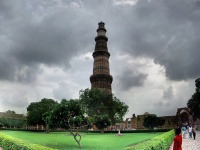
The Qutub Minar is a mammoth tower that was built between 1193 and 1369 to symbolise Islamic rule over Delhi, and to commemorate the victory by Qutab-ud-din over the city's last Hi…
Qutub Minar
The Qutub Minar is a mammoth tower that was built between 1193 and 1369 to symbolise Islamic rule over Delhi, and to commemorate the victory by Qutab-ud-din over the city's last Hindu king. Standing 238 feet (72m) tall, the tower is decorated with calligraphy representing verses from the Quran, and tapers from 50 feet (15m) at the base to just eight feet (2.5m) at the top. There are five distinct storeys, each encircled with a balcony. The first three are built of red sandstone, and the upper two are faced with white marble.
Website www.qutubminar.org/
Humayun's Tomb
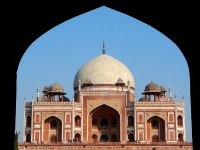
Humayun's Tomb is one of the best-preserved and most beautiful examples of Mogul architecture in Delhi, and is often seen as a forerunner of the Taj Mahal in Agra. Building on the …
Humayun's Tomb
Humayun's Tomb is one of the best-preserved and most beautiful examples of Mogul architecture in Delhi, and is often seen as a forerunner of the Taj Mahal in Agra. Building on the tomb started in 1564 after the death of Humayun, the second Moghul emperor, and its construction was overseen by Haji Begum: his senior widow and the mother of Akbar. The tomb is an octagonal structure capped by a double dome that soars 125ft (38m) into the sky, and is set in a formal Persian garden. Some careful restoration work has been done on some of the buildings and art but nothing important has been altered.
Website www.humayunstomb.com/

Rashtrapati Bhavan
After his visit in 1911, the Emperor of India, King George V, decreed that the capital should be moved from Calcutta to Delhi. Renowned English architect, Edwin Lutyens, was commis…
Rashtrapati Bhavan
After his visit in 1911, the Emperor of India, King George V, decreed that the capital should be moved from Calcutta to Delhi. Renowned English architect, Edwin Lutyens, was commissioned to plan the new government centre, which he focused around Rajpath: the grand, tree-lined boulevard that runs between the Secretariat Buildings and India Arch, the war memorial built in 1921. Rashtrapati Bhavan was built by Lutyens and Sir Herbert Baker between 1921 and 1929 on the gentle slope of Raisina Hill, and is flanked by the Secretariat Buildings. This immense palace, larger than Versailles, was created for the Viceroy and is now the residence of the President of India.
Chandni Chowk
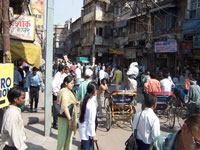
No trip to Delhi would be complete without a visit to one of the bazaars that surround Chandni Chowk (Moonlight Square) in Old Delhi, where shops and stalls display a wonderful arr…
Chandni Chowk
No trip to Delhi would be complete without a visit to one of the bazaars that surround Chandni Chowk (Moonlight Square) in Old Delhi, where shops and stalls display a wonderful array of goods, and offer a pungent and colourful insight into everyday Delhi life. Chandni Chowk has a large number of galis (lanes) and each one is different, with its own atmosphere and selection of goods to buy. A wonderful range of seasonings, spices and condiments, and second-hand goods are among the items on offer.
Website www.delhitourism.gov.in/delhitourism/shopping/chandni_chowk.jsp
Delhi
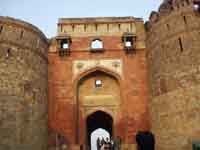
Delhi is a city of contrasts, where an elephant can overtake a snazzy Italian sports car on the streets, where commanding colonial mansions stand next to overcrowded slums, and whe…
Delhi
Delhi is a city of contrasts, where an elephant can overtake a snazzy Italian sports car on the streets, where commanding colonial mansions stand next to overcrowded slums, and where cows are revered but musicians are labelled 'untouchable'. The city's pace is chaotic, yet strangely relaxed, making it ideal for exploring. Visitors are almost certain to have some strange and exotic experiences. The city is full of fascinating temples, museums, mosques and forts, each with a distinctive architectural style. In Old Delhi, visitors will find a charming selection of colourful bazaars and narrow winding alleys. In comparison, New Delhi, the city created to reflect the might of the British Empire, consists of tree-lined avenues, spacious parks and sombre-looking government buildings.