


Milan Travel Guide
Milan is about fashion, food and all things glamorous, proudly presenting the modern face of Italy and luring tourists with its sleek cityscape and cultural riches. Travellers visit to Milan to discover the 'alternative' Italy, for the city embodies everything that is chic and sophisticated in Italian culture, far removed from quaint Tuscan villages or warbling gondoliers. Milan is the home of haute couture and haute cuisine, world-class shopping, supreme opera, elegant skyscrapers, tasteful galleries and museums, and spacious piazzas. The proud denizens of this city seem to do everything with style and they know how to have fun: Milan has an energetic nightlife and a sophisticated clubbing scene.
Fashion fundis, shopaholics, opera-lovers and anyone who enjoys the finer things in life (and can afford to pay for them) will revel in a holiday in Milan. This is not to say there are no archaeological or historical treasures in the city; sightseers searching out the ancient and historic will find plenty of diversions. Art-lovers are drawn to Milan to see the masterpieces stored in its leading galleries and the piece de resistance, da Vinci's The Last Supper fresco, is in the refectory of the Santa Maria delle Grazie.
Best time to visit Milan
Mid-summer (July and August) is stiflingly hot and humid in the city, and most locals head for the lakes at this time of year. The best time to holiday in Milan is in early summer (May to June), or early autumn (September), when the weather is warm and sunny. Winters are very chilly, wet and foggy.
What to see in Milan
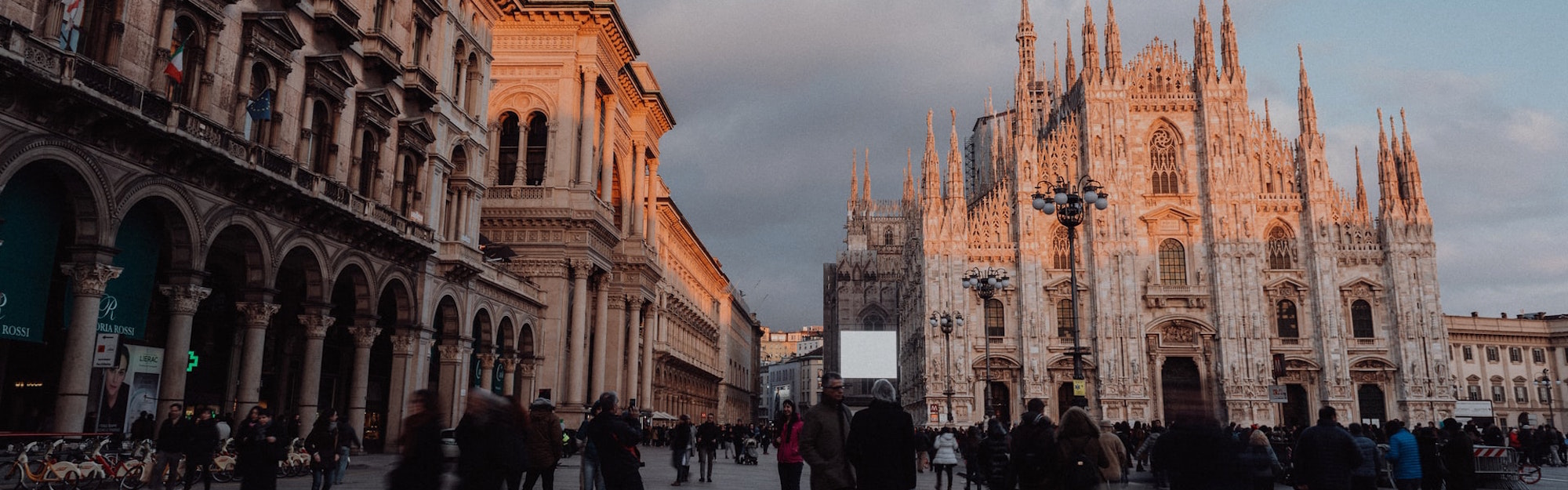
-Marvel at the breathtaking Duomo di Milano, the world's largest Gothic cathedral.
-See Leonardo da Vinci's legendary designs and inventions in the National Science and Technology Museum.
-Seek out the peaceful beauty of the old botanical gardens at Orto Botanico di Brera.
-Gaze upon da Vinci's The Last Supper in the UNESCO-listed Santa Maria delle Grazie.
What to do in Milan
-Visit the fascinating Basilica of Sant'Ambrogio, one of the oldest churches in Milan.
-Explore the vast Sforzesco Castle, one of the city's most iconic monuments.
-Catch an opera at the world-famous La Scala Theatre.
-Wander through one of Italy's finest art collections at the Pinacoteca di Brera.
Beyond Milan
There are many enviable excursions from Milan: the stunning scenic villages of Cinque Terre are within easy reach; the glamorous playground of Portofino attracts many day-trippers; and the beautiful Dolomite Mountains beckon to outdoor enthusiasts. Venice and Genoa are also close enough to encourage quick visits.
Getting there
Flights to Milan most commonly land either at Milan Linate International Airport, five miles (8km) southeast of central Milan, or Milan Malpensa International Airport, located 28 miles (45km) northwest of Milan. Despite its distance from the city Milan Malpensa is one of the busiest airports in Europe and buses, trains and taxis ferry passengers into the city.
Did you know?
-Milan is considered one of the most expensive cities in the world.
-The famous Milan Cathedral took nearly four centuries to complete.
-Milan has been ruled by Celts, Romans, Goths, Lombards, Spaniards, and Austrians in its long history.