

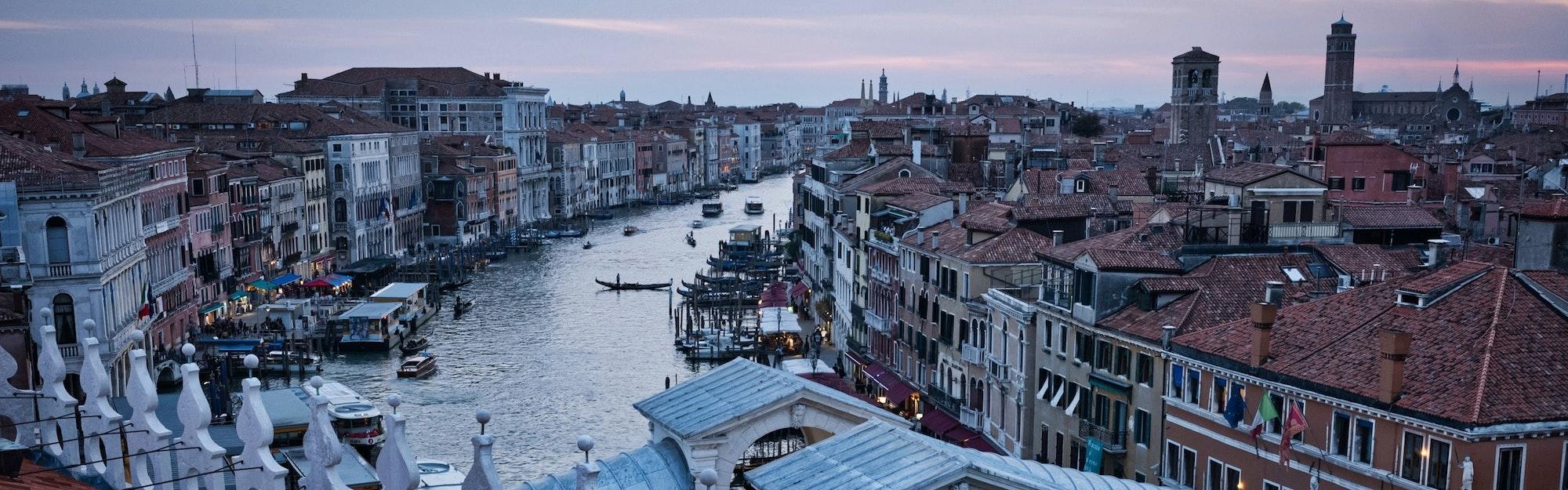

Venice Travel Guide
One of the most romantic and unique travel destinations in the world, Venice's fame is perennial and well-deserved; the watery city is full of treasures and surprises and is guaranteed to delight visitors. Floating on its blue lagoon with an almost dream-like quality, Venice is just as romantic and beautiful as it looks in travelogues and movies. Visitors who realise their ambition of a holiday in the city will certainly not be disappointed. The charming piazzas and singing gondoliers, idiosyncratic buildings and crumbling palaces are all there to be seen, admired and photographed for posterity. Venice's art galleries, museums and churches house some of the masterpieces of European art and the difficulty for tourists is choosing what to see when so many treasures are accessible. A Venice holiday may be crowded and expensive, but it will also surpass all expectations.
Best time to visit Venice
The busiest tourist seasons in Venice are between spring and autumn (April to October), over Christmas and during the popular Carnival in February. Winter, between December and February, is a good option for a Venice holiday because, although it's cool and wet, the sights are more easily enjoyed and accommodation is cheaper.
What to see in Venice
-Marvel at the elegant architecture of Venice's picture-perfect Grand Canal.
-See the breath taking interior of the School of St Roch, covered in the art of Tintoretto.
-Enjoy a dose of modern art from the world-renowned Peggy Guggenheim Collection.
-Admire the views of Venice from the 9th-century Campanile di San Marco.
What to do in Venice
-Enjoy a sophisticated meal in one of the many restaurants off St Mark's Square.
-Wander across the iconic Rialto Bridge, and explore the markets in the area.
-Take a Gondola Ride through the picturesque, narrow canals of the city.
-Stroll through the Gallerie dell'Accademia to see one of Europe's finest art collections.
Beyond Venice
The islands of Murano, Burano and Torcello have been incorporated into Venice to some extent and all three offer some interesting attractions for visitors. For a break from traditional sightseeing, or as a treat for the kids, Aqualandia water park is a blast and also very close to the city. Further afield, the historic city of Padua is a charming destination. Both Milan and Florence are within reach.
Getting there
The Venice Marco Polo Airport is the most common entry point for visitors and is conveniently located five miles (8km) north of Venice. It's possible to get to the city from the airport by bus, boat, taxi or train.
Did you know?
-From the 14th century to the 16th century, Venice's Republic was the most powerful force in the Mediterranean region.
-Venice has 177 canals and more than 400 bridges.
-Despite the ingenious building methods that have kept Venice afloat for centuries, the city is slowly sinking.