


Belfast Travel Guide
The fortunes of Belfast have risen and fallen dramatically over time. It began as a Bronze Age settlement; grew hugely in power as well as size during the Industrial Revolution; suffered extensive World War II bombings; and has famously been a hotspot in the massive civil conflict that has split Ireland. Today, the capital of Northern Ireland is a thriving city that has regained some of its old charm and industry, and has begun to lure a stream of curious travellers. City breaks in Belfast are becoming increasingly popular, with a variety of low-cost European carriers offering cheap flights to Northern Ireland's capital.
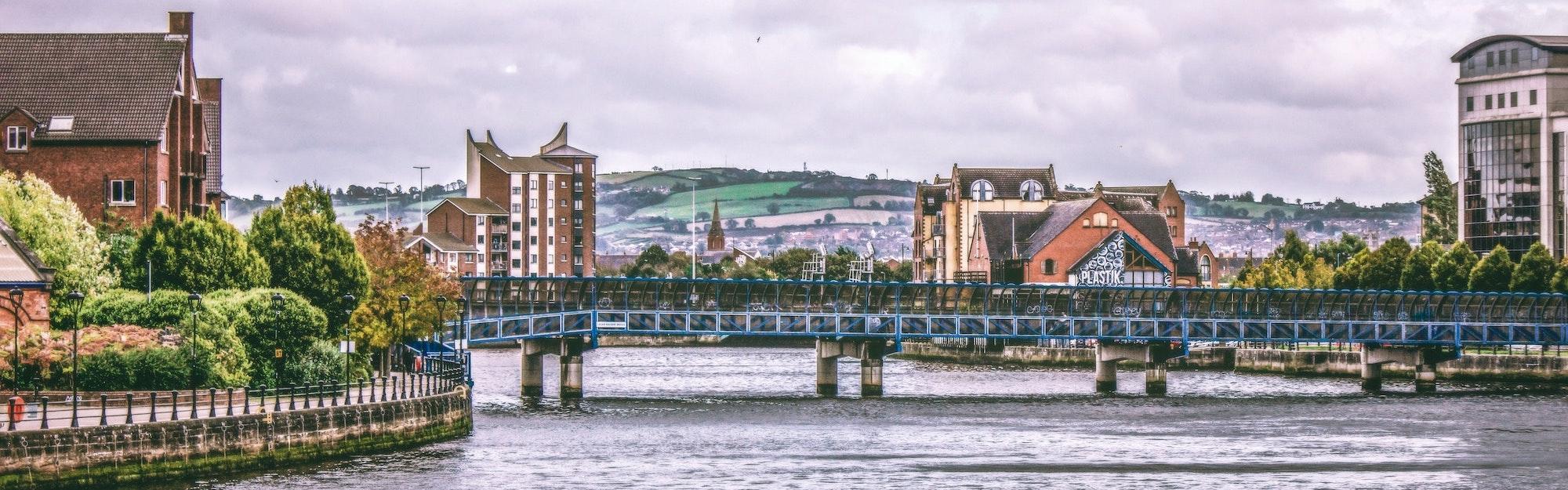
Belfast is situated near the mouth of the River Lagan, and blossomed in the 17th century with an influx of English and Scottish settlers. The port city grew in prominence during the Industrial Revolution, with booming linen, rope-making, and shipbuilding industries. The ill-fated Titanic was built here in the Harland and Wolff shipyards, and today Belfast still boasts the world's biggest dry dock, as well as a restored Waterfront Complex that houses chic restaurants, shops, and ubiquitous Irish pubs.
Much of the city's architectural heritage was destroyed during repeated bombings in World War II, as well as during The Troubles: a period of civil conflict between Roman Catholic nationalists and Protestant unionists that raged from 1969 until the late 1990s. Several exquisite Victorian and Edwardian buildings still remain and have been filled with trendy bars, boutiques, galleries, museums, and restaurants in an attempt to regenerate the city's image. Evidence of The Troubles can still be seen in the many murals that line Falls Road and Shankill Road, and the Europa Hotel has become famous as one of the most-bombed buildings in Europe, having being targeted no less than 33 times.
Belfast is often overlooked as a tourist destination, but its fascinating history, ongoing struggles, numerous attractions, and, above all, the warmth and acerbic wit of its inhabitants, make it an interesting stop on any tour of the United Kingdom. It also serves as an excellent base from which to explore the many natural wonders of Northern Ireland.