

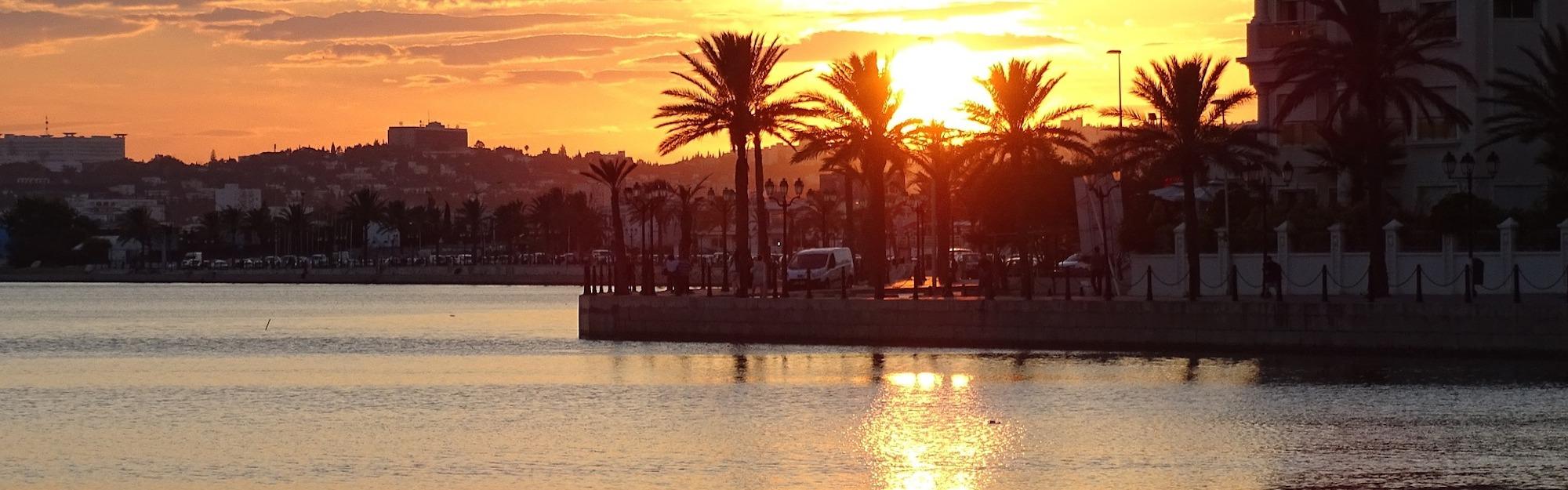

Tunis Travel Guide
Tunisia's capital and largest city stretches along the coastal plains and surrounding hills of the Gulf of Tunis. Steeped in a rich and fascinating history, it is home to the famous ruins of Carthage, the ancient enemy of the Romans. The ruins are a UNESCO World Heritage Site and have witnessed the passage of the Phoenicians, Romans, Vandals, Byzantines, Turks, Spanish, and French over the last 3,000 years. History buffs should not miss the opportunity to visit them.
Other attractions in Tunis include the National Museum of Bardo, which tells the stories of Tunisia's history from the Phoenicians right through to modern-day times, and the old Medina. The Medina co-exists with the modern architecture of the new city (Ville Nouvelle) and is linked by labyrinths of alleys and covered passages, infused throughout by the magical aromas, vibrant colours, and sounds of bustling souks.
The modern city of Tunis is located just through the Sea Gate ( which has remained unchanged since it was erected in 1848. It is where the grand Avenue Habib Bourguiba, seen as the Champs-Elysees of Tunisia, crosses through the middle. Colonial architecture can be found here illustrating the history of this culturally diverse and historic city.
The spicy foods and flavours of local dishes may blow the socks off of some tourists though, to others, the fragrant heat of the fiery red chilli paste known as is an essential accompaniment to one's Tunis experience. Tunisian coffee, much like the Turkish variety, is world-renowned for its rich flavours and energising properties.