

Country guides
 Africa
Libya Travel Guide
Oil-rich Libya has had a tumultuous history as many have wrestled for control of this fascinating land. Tucked between Egypt and Tunisia while bordering the Mediterranean Sea, it has seen invasions by Turks, Vandals, Byzantines, Romans, Arabs and Italians, gaining independence in 1951.
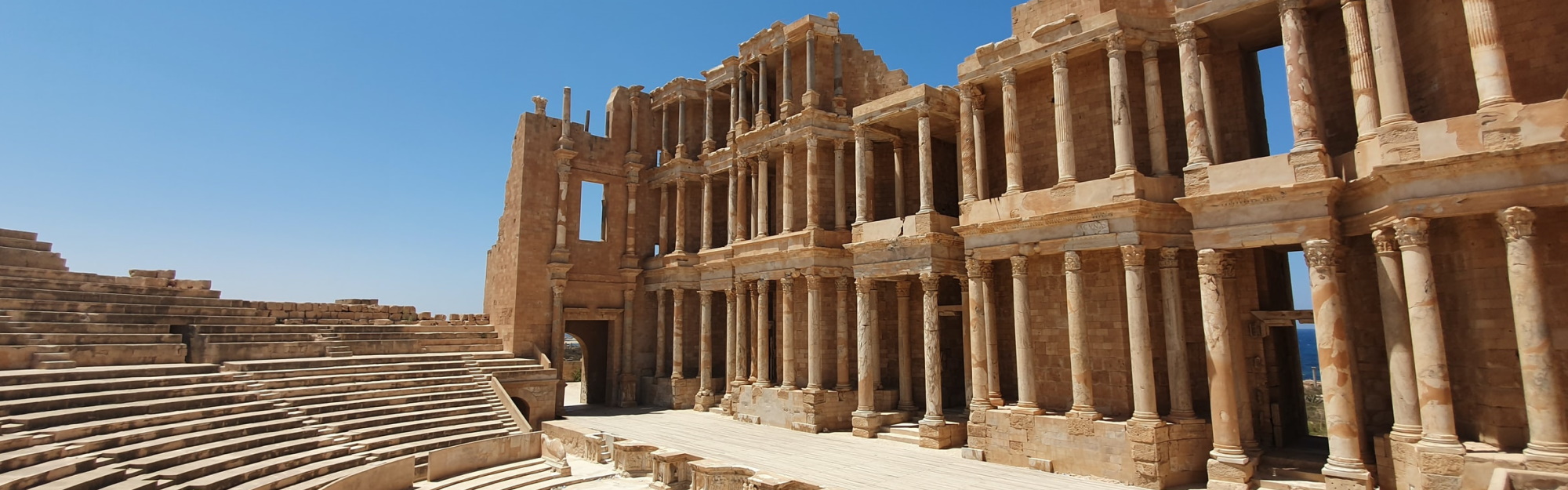
These civilisations have left their mark, seen in the striking Roman and Greek ruins at Leptis Magna, Cyrene and Sabratha. Despite this, Libya remains quintessentially Arabic, as evident in the Medina (old city) of the capital Tripoli, the nomadic lifestyle of desert-dwelling Bedouin and Berber tribes, and the language and culture of the people.
Tripoli is the country's main port, a bustling city dominated by the Medina's walls and gates, as well as the large palace complex of the splendid Red Castle, Assaraya al-Hamra. Filled with orange groves and grapevines, this lush city of palms and olive trees is home to several mosques, museums and historical sites, as well as modern amenities. Benghazi is Libya's second largest city and has a more modern atmosphere, having been all but destroyed during World War II. Benghazi acts as a good base from which to explore the neighbouring Green Mountain area, as well as several Roman ruins along the coast.
Libya is largely an undiscovered tourist destination, due to a current high risk of terrorism and sanctions imposed on the country through its rocky political history. There was a rise in tourism and an increased interest in the country after the lifting of sanctions in 2003, with a number of resorts springing up along Libya's Mediterranean coast. But the country's descent into civil war in 2011 put an end to Libya's popularity as a travel destination. But there still remains oases to be discovered, ruins to explore and cities to enjoy.