

Country guides
 Europe
Things to do in Poland
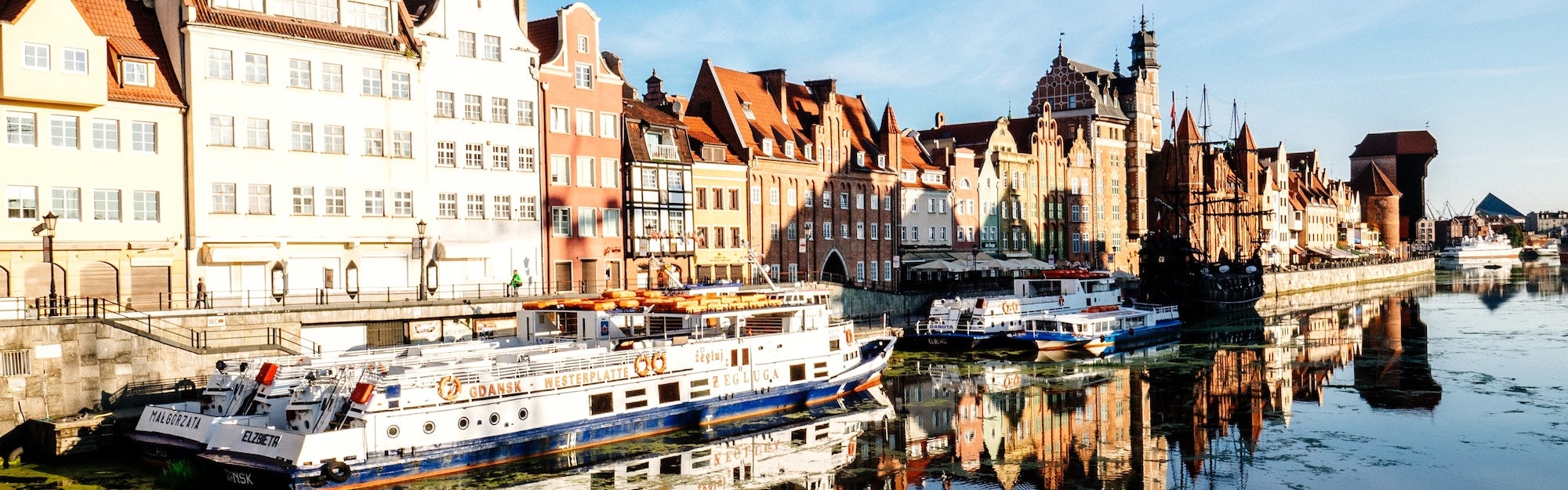
When sightseeing around Poland you'll find all the hallmarks of European charm in abundance: alpine mountains, historic buildings, resplendent lakes, lush meadows, untainted beaches, and some fascinating albiet harrowing sites from the Second World War.
The capital of Warsaw was the first city to fall to Hitler and had to be almost completely rebuilt after the 1944 invasion. Parts of the Old Town were built to replicate the city as it had stood in the 17th and 18th centuries and the Historical Museum of Warsaw, a salute to the city's violent past, is a must. A visit to Poland would not be complete without a trip to the country's most significant wartime landmark: Auschwitz, Hitler's biggest and most notorious concentration camp.
About two hours north of Warsaw is the Bialowieza Primaeval Forest, a UNESCO World Heritage Site which is one of the last remnants of the European primeval forest which once covered most the continent. Further north visitors will find other rare vestiges of old Europe, like the Gothic Castle in Malbork, the largest and most impressive brick fortress in Europe. There are several other wooden and stone churches, temples and other impressive buildings throughout Poland's vast and glorious countryside, which can be traversed by bus or train.
The city of Krakow is the most popular tourist destination in Poland, and the city which suffered least during the war. The main attraction is the remarkably well-preserved medieval centre, but Krakow is a cosmopolitan, modern city boasting the wonderful mix between old and new which characterises the whole country.
Old Town (Starego Miasta)
The Old Town is an historic focal point, rebuilt in original 17th and 18th-century style following the war. The picturesque Old Market Square (Rynek) is at the centre, surrounded b…
Old Town (Starego Miasta)
The Old Town is an historic focal point, rebuilt in original 17th and 18th-century style following the war. The picturesque Old Market Square (Rynek) is at the centre, surrounded by restored buildings and colourful three-storey merchant houses with Baroque and Renaissance facades, lively open-air restaurants, art stalls, and the Historical Museum of Warsaw. Buskers, painters, and musicians provide entertainment, while cobbled streets and alleyways contain beautiful Gothic churches and palaces. The impressive Royal Castle was once the home of the Polish Kings while ramparts and watchtowers dot the medieval walls surrounding the old city.
Museum of Warsaw
The Museum of Warsaw is one of the best of the city's impressive array of museums. Its three storeys are crammed with fascinating exhibitions, covering every aspect of Warsaw's his…
Museum of Warsaw
The Museum of Warsaw is one of the best of the city's impressive array of museums. Its three storeys are crammed with fascinating exhibitions, covering every aspect of Warsaw's history and life from the city's establishment to the present day. It occupies almost an entire side of a square in Old Town, housed in quaint historical buildings and boasting 52 rooms with permanent exhibitions, four with temporary exhibitions, a cinema, a library, and a reading room. A special feature is a documentary film showing the destruction and reconstruction of the city, with footage shot by the Nazis during their calculated and systematic annihilation of Warsaw, and footage of the careful rebuilding after the war. The film is shown in English at 10am and 12pm from Tuesday to Friday, and at 12pm and 2pm on Saturday and Sunday.
Address Rynek Starego Miasta 28-42, 00-272 Warszawa, Poland.
Website www.muzeumwarszawy.pl
Opens 10am to 6pm, Tuesday to Sunday.
The Royal Way
Known as the Royal Way, this two-and-a-half mile (4km) route stretches from the Royal Castle in the Old Town to the stately King's Palace at Wilanów on the outskirts of the city. …
The Royal Way
Known as the Royal Way, this two-and-a-half mile (4km) route stretches from the Royal Castle in the Old Town to the stately King's Palace at Wilanów on the outskirts of the city. It bisects the central city from north to south, and is lined with galleries, museums, and historical buildings St Anne's Church. Along the way are the royal gardens of Park Lazienki with its lakes, peacocks, and charming 18th-century Lazienki Palace, which was the royal summer residence. A monument of the famous Polish composter Frederic Chopin stands in the park, with summer concerts held on the lawns. The Royal Way ends at the splendid Wilanów Palace which was modelled on Versailles, containing a museum and an art gallery called the Orangery.
Website www.wilanow-palac.art.pl
Westerplatte
The peninsula of Westerplatte saw the beginning of Second World War. A small Polish garrison heroically held out against the attack of seven days before surrendering to German forc…
Westerplatte
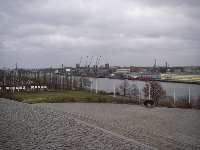
The peninsula of Westerplatte saw the beginning of Second World War. A small Polish garrison heroically held out against the attack of seven days before surrendering to German forces, with the site now a towering memorial to the defenders. With only 180 Polish soldiers, they fought on knowing they had no chance of reinforcement or resupply. A small museum is accompanied by ruins of the barracks and guardhouses left from the shelling, standing harrowing and dilapidated in an otherwise picturesque setting reachable by bus. Surrounding scenery is best appreciated on a boat or bike trip.
Malbork Castle
Malbork Castle is the world's largest brick fortress and one of the most impressive in Europe. The Teutonic Knights built it in 1276 and slowly began to establish themselves as fea…
Malbork Castle
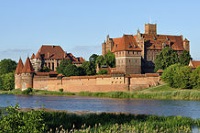
Malbork Castle is the world's largest brick fortress and one of the most impressive in Europe. The Teutonic Knights built it in 1276 and slowly began to establish themselves as fearsome rulers, taking control of most of Poland until they were defeated at the Battle of Grunwald in 1410. The immense brick stronghold incorporates a system of multiple defence walls with gates and towers, guarding an interior of arcaded courtyards, chapels, a treasury, the Knights' Hall, and an armoury. The castle houses several exhibitions of tapestries, coins and medals, medieval sculptures, and weapons. During summer, the courtyard is used as a venue for sound and light shows. Guided tours are available and there are audio guides for those who prefer to explore independently, although the number of audio guides is limited.
Address Staroscinska 1, 82-200 Malbork, Poland
Website www.zamek.malbork.pl
Transport
31 miles (50km) from Gdansk by train or bus
Opens 9am to 7pm, Monday to Sunday.
Main Market Square (Rynek Glówny)
Dating from 1257, the Central Market Square was one of the largest squares in medieval Europe and remains the social heart of Krakow. Surrounded by historic buildings, museums, and…
Main Market Square (Rynek Glówny)
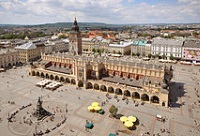
Dating from 1257, the Central Market Square was one of the largest squares in medieval Europe and remains the social heart of Krakow. Surrounded by historic buildings, museums, and magnificent churches, the impressive expanse of flagstones is a hub of commercial and social activity. Flower sellers, ice-cream vendors, musicians, pigeons, students, and groups of tourists fill the square. The striking church of St Mary's is an impressive twin-spire Gothic structure while at the centre of the square is the splendid medieval Cloth Hall, its upstairs art gallery housing a collection of 19th-century Polish paintings and sculptures.
Wawel
Wawel is a hill overlooking Krakow, upon which stands an architectural complex that includes Wawel Castle and the Gothic Wawel Cathedral. It was here that all the Polish kings ruli…
Wawel
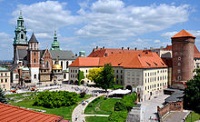
Wawel is a hill overlooking Krakow, upon which stands an architectural complex that includes Wawel Castle and the Gothic Wawel Cathedral. It was here that all the Polish kings ruling between the 14th and the 17th centuries were crowned and buried, and it lies at the heart of Poland's royal history. The Renaissance-style castle is now a museum, with visitors able to see the Royal Private Apartments, Crown Treasury, Armoury, and the State Rooms. Of the many chapels in the cathedral, the golden-domed Chapel of King Sigismund is the finest. The bell tower can be climbed for views over the city and to see the enormous 11 tonne bell. A number of different guided tours are available so check the official website listed below for details.
Website www.wawel.krakow.pl
Transport
Tram 10 or a short walk from the Main Square, Rynek Glówny.
Kazimierz District and the Old Synagogue
The Kazimierz quarter was the centre of Jewish religion, culture, and learning before the Second World War. Badly damaged during the Nazi occupation, it has been rebuilt so visitor…
Kazimierz District and the Old Synagogue
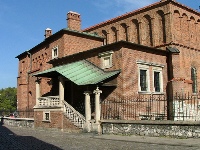
The Kazimierz quarter was the centre of Jewish religion, culture, and learning before the Second World War. Badly damaged during the Nazi occupation, it has been rebuilt so visitors can admire the historical architecture and get an experience of what daily Jewish life was once like. The area is enlivened by art galleries, kosher restaurants, and numerous cultural events. The Oskar Schindler Factory Museum is itself a popular tourist attraction in Krakow, dedicated to the memory of Schindler and the Jewish workers he managed to save from the death camps. The Old Synagogue is part of the Historical Museum of Krakow, where the collection of physical memories from the Kazimierz Jewish community is kept.
Address Szeroka 24, 31-053 Kraków, Poland
Website http://www.mhk.pl/oddzialy/stara-synagoga
Transport
Tram 3, 9, 11 or 13.
Wieliczka Salt Mine
A UNESCO World Cultural Heritage Monument, the Salt Mine at Wieliczka is a unique underground complex built in the Middle Ages. The series of labyrinthine tunnels, chambers, galler…
Wieliczka Salt Mine
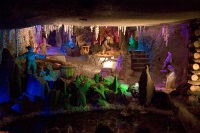
A UNESCO World Cultural Heritage Monument, the Salt Mine at Wieliczka is a unique underground complex built in the Middle Ages. The series of labyrinthine tunnels, chambers, galleries, and underground lakes are spread over nine levels and reach a depth of more than 1,000ft (304m), but visitors are restricted to a tour of three levels. Centuries-old passageways contain huge crystalline caverns and carved chapels. The highlight is the Blessed Kinga Chapel where everything is carved from salt, dedicated to the patron saint of Polish mine workers. The world's first subterranean therapeutic sanatorium is situated 656ft (200m) below the surface, and makes use of the saline air for the treatment of asthma.
Address Ul. Danilowicza 10, Wieliczka
Website www.kopalnia.pl
Transport
Buses and minibuses leave from outside the train station; or else there is the local Krakow-Wieliczka train
Auschwitz Memorial Museum
The Auschwitz concentration camp forms the largest cemetery in the world, preserved as a memorial to the victims of the Holocaust during the Second World War. Visitors can obvserve…
Auschwitz Memorial Museum
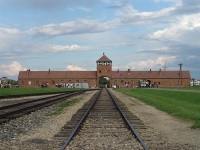
The Auschwitz concentration camp forms the largest cemetery in the world, preserved as a memorial to the victims of the Holocaust during the Second World War. Visitors can obvserve the structures, ruins, and gas chambers, while visiting exhibits at the museum. The buildings contain displays of photographs and piles of personal articles of the victims, including battered suitcases, and thousands of spectacles, hair, and shoes collected from the bodies. The sheer scale of the tragedy can be experienced at the Birkenau Camp, with a viewing platform to give some perspective over the vast fenced-in area. It was the principal camp where the extermination of millions took place, a chillingly efficient set-up with rows of barracks and four colossal gas chambers and ovens. Purpose-built railway tracks lead through the huge gateway along which victims were transported from the ghettos to the camp in crowded box-like carts. Taking a guided tour of the camps is the best way to fully comprehend what you are seeing and a tour takes at least three and a half hours. Visitors should try and book a place on one of the various guided tours at least two weeks before visiting - see the official website below for details.
Address Wiezniow Oswiecimia 20, 32-603 Oswiecim, Poland
Website auschwitz.org/en/
Transport
There are regular coach and rail services from Krakow (a one hour journey), and a shuttle bus runs between Auschwitz I and Birkenau from mid-April to October.
Opens 8am to 3pm, Monday to Sunday.

Bialowieza National Park
Bialowieza National Park is a heavily protected UNESCO World Heritage site. It guards the last remnants of the primeval forest that used to cover most of Europe at the time of the …
Bialowieza National Park
Bialowieza National Park is a heavily protected UNESCO World Heritage site. It guards the last remnants of the primeval forest that used to cover most of Europe at the time of the last ice age. The park is the last place on earth that tourists can see European bison, huge beasts that once roamed across the continent, living undisturbed in their natural habitats. An ecotourism destination of international repute, the nearby town of Bialowieza has launched numerous luxury spas and elite lodgings. Bialowieza National Park is a short train ride from Warsaw (two and a half hours) making it possible to visit the park on a daytrip, but it is best to spend at least one night in the area if possible.
Sopot
Although still very much a well-kept secret on the mainstream tourist scene, Northern European travellers have been flocking to Sopot for many years for its gorgeous sandy beaches …
Sopot
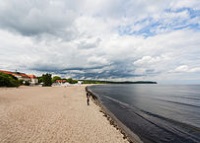
Although still very much a well-kept secret on the mainstream tourist scene, Northern European travellers have been flocking to Sopot for many years for its gorgeous sandy beaches on the shore of the Baltic Sea. Primarily a beach resort and health spa town, Sopot buzzes every summer. Throngs of visitors walk along its famous wooden pier while enjoying the long sunny days and numerous restaurants, bars, and shops. There are a few other tourist attractions in the town, like a museum and a water park, but the beachfront is the highlight. With its vibrant nightlife and relative obscurity, Sopot is the perfect cheaper option for budget travellers and backpackers.