

Province guides
 United States of America
Minnesota, in the north central region of the USA, has been dubbed the 'land of 10,000 lakes'. The poetic name of the state is a Sioux phrase meaning 'land of sky-tinted water'. Obviously this means Minnesota is rather wet, thanks to antediluvian glaciers which scoured the landscape, leaving numerous basins ready to be filled by great rivers like the Mississippi.
The result is Lake Superior, with its rocky and scenic shoreline, as well as thousands of other small bodies of water, linked by hiking trails, ideal for outdoor recreation like camping, kayaking, fishing and canoeing. In wintertime the countryside becomes a wonderland for cross country skiing, snowmobiling and dog sledding. Pleasant harbour towns and villages hug the north shore of Lake Superior along the scenic Highway 61 drive, that offers breathtaking vistas on its route to the Canadian border.
The original inhabitants of this watery world were the Sioux Indians. In the early 19th century, French pioneers penetrated the thick forests and found a treasure-trove of furry creatures like beavers and muskrats, which sparked a prosperous fur trade in the region, accompanied by fishing and logging. Iron ore was then detected in the hills, and the influx of settlers eventually drove out the Sioux. Today the northeastern extremity of Minnesota still remains as largely unspoilt wilderness, much as it was when the first Europeans came across it in the 16th century.
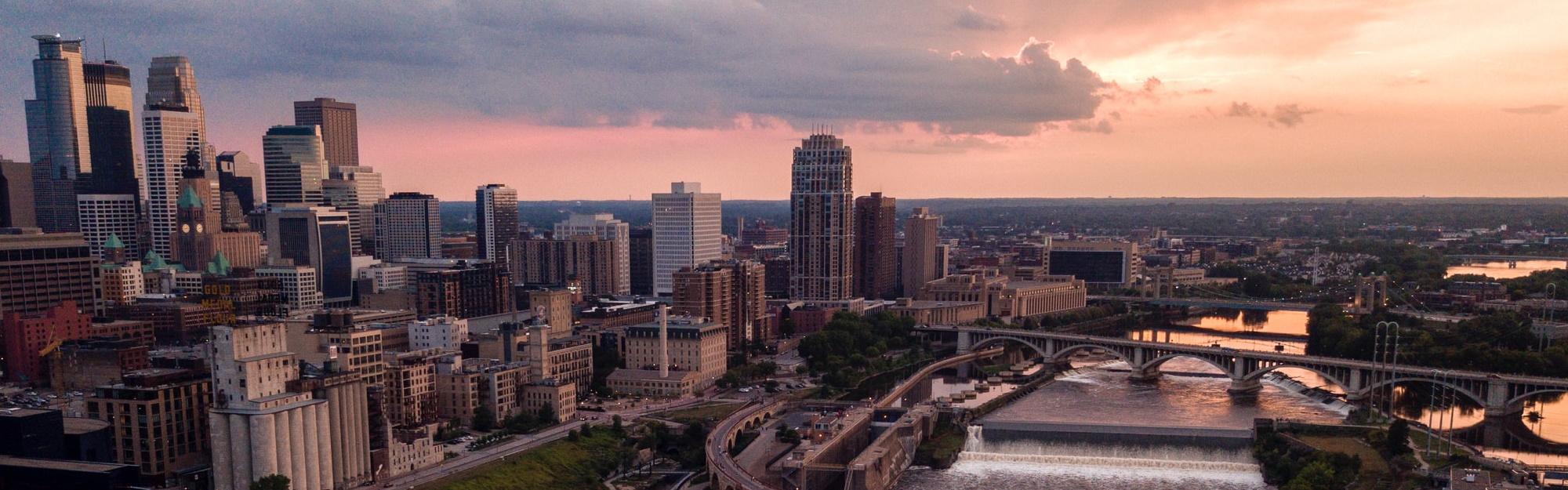
While there are many jokes about rural Minnesotan stereotypes, most of the population of Minnesota is urbanised, with more than half inhabiting the Twin Cities, Minneapolis and St Paul, that occupy opposing banks on the Mississippi River. The cities reflect the jovial culture of the roots of the early settlers, who were largely German, Irish and Scandinavian. The Twin Cities are renowned for their entertainment, attractions and shopping opportunities. Minneapolis in particular is a shopper's dream with the mighty Mall of America situated in its suburb of Bloomington.