

Province guides
 United Kingdom
Once the ancient kingdom of Ulster, Northern Ireland has been home to Gaelic kings, ancient Irish clans, and seafaring Vikings. It is the land of St Patrick and the giant Finn McCool, and is steeped in the myths and legends of a mysterious and heroic past. Northern Ireland's appeal encompasses beautiful scenery, historic forts and castles, and a rich legacy of Celtic Christianity, as well as the Ulster people themselves who are welcoming and genuine, with a lively sense of humour. A major draw is the small size of the country; its sights are all just a short, scenic drive from each other along mostly rural roads whose only traffic jams are caused by flocks of sheep and cattle crossings.
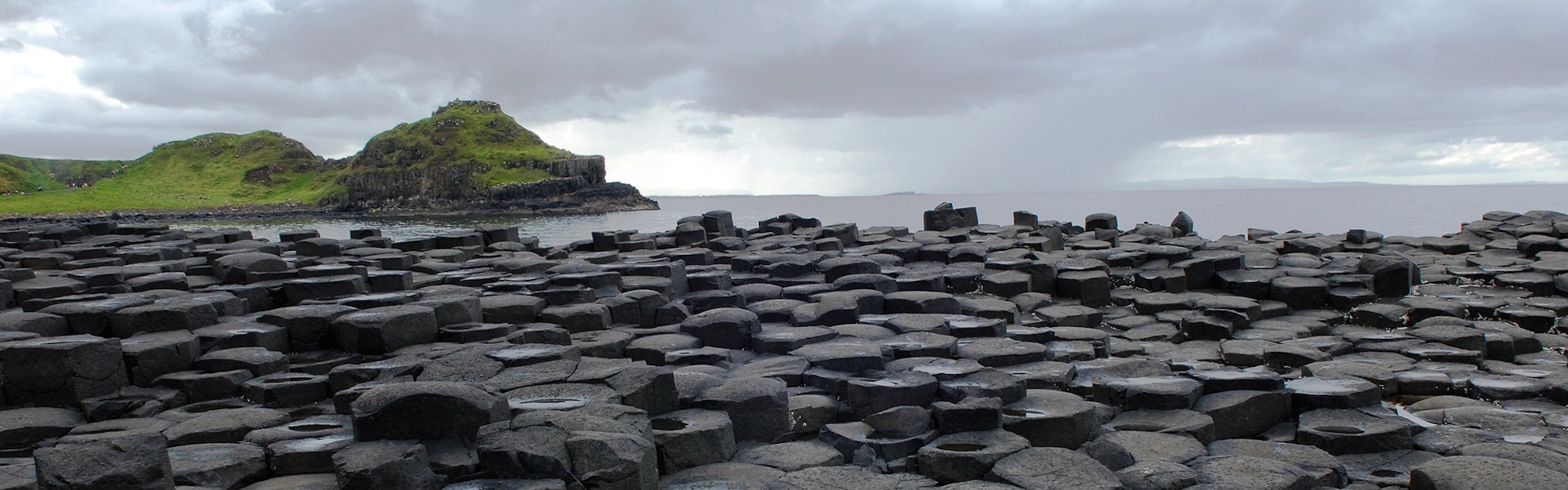
To the southeast lie some of Ireland's loveliest landscapes in the Kingdoms of Down, a region recognised worldwide as an Area of Outstanding Natural Beauty. County Down combines miles of spectacular coastline with fishing villages, seaside resorts, loughs, forests and the Mountains of Mourne. To the north is the dramatic Antrim coastline with its soaring cliffs, unblemished beaches, and the magnificent, glacier-carved Glens of Antrim. Among the unusual rock formations glimpsed from the coastal road, none is stranger or more memorable than the famous Giant's Causeway, the legendary tourist attraction that is fabled to be the highway built by giant Finn McCool, to bring his lady love to Ulster from an island in the Hebrides. This UNESCO World Heritage Site is a mass of thousands of basalt columns tightly packed together to form stepping stones leading from the foot of the cliffs into the sea.
The gateway to the northwest is the historic walled city of Londonderry, or Derry, a city popularly home to poets and storytellers, which hosts plenty of live music and festivals, and is a centre of culture and creativity. Across the Sperrins is the city of Belfast, surrounded by hills and a wealth of industrial sites, such as old linen and corn mills that are a reminder of Northern Ireland's industrial heritage. Belfast played a significant role in the Industrial Revolution and the development of its manufacturing businesses quickly turned the 17th-century village into a robust metropolis that today is home to a third of the country's population and some wonderful architecture.
With its green hills, rivers and lakes, mountains and spectacular coastline, Northern Ireland is the perfect setting for many outdoor activities, while in the towns and villages, visitors will undoubtedly be invited to join in the or good fun, centred on a traditional Irish music session and a pint or two of the black stuff.